Aluminum die castings are widely used in aerospace, automotive, and marine industries due to their excellent material properties, lightweight nature, and ease of forming. However, porosity in aluminum die casting remains one of the most common and challenging defects. These pores not only affect the surface appearance but can also weaken strength and functionality, sometimes even leading to part rejection.
This guide provides a comprehensive analysis of the causes of porosity in aluminum die casting, explores effective porosity solutions, and offers practical prevention strategies to help improve product quality and production efficiency.
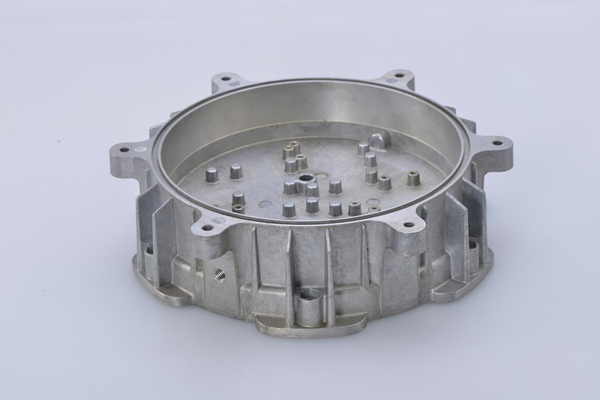
Porosity typically appears as spherical or oval-shaped holes inside or on the surface of die castings, with diameters ranging from 1 mm to 20 mm. Based on their formation, porosity defects can be divided into several categories:
Hydrogen porosity: Small, needle-like pores uniformly distributed inside the casting, usually visible only after machining. They result from the reaction between molten aluminum and water vapor, particularly when degassing is insufficient during melting.
Air entrapment porosity: Round, smooth, and shiny pores caused by air being trapped during metal flow, commonly found in the shot sleeve, gating system, or cavity.
Steam porosity: Dull and irregular pores caused by moisture on the mold surface or excessive mold release agent that vaporizes during casting.
1. Raw Materials and Melting Process
o High gas content in molten aluminum due to incomplete degassing.
o Impurities in recycled alloys releasing gases during melting.
o Overheating during melting, which increases hydrogen solubility.
2. Improper Die Casting Process Parameters
o Excessive filling speed, leading to turbulence and air entrapment.
o Incorrect pouring temperature, either too high (higher gas solubility) or too low (poor flowability).
o Incorrect switching point of injection phases, causing unstable flow.
3. Mold Design and Venting Issues
o Poor venting design or blocked vents prevent gas escape.
o Improper gating system with sharp corners and sudden area changes causing turbulence.
o Uneven cooling, trapping gas in localized areas.
4. Mold Release Agents and Spraying Process
o High gas emission from mold release agents not fully dried.
o Over-spraying or insufficient air blow drying leaving moisture behind.
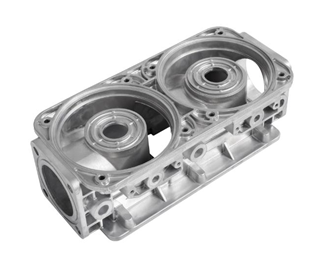
1. Optimizing Melting Process
o Use clean, dry alloy materials and minimize impure recycled materials.
o Strengthen degassing using rotary degassing with nitrogen or argon.
o Control melting temperature to reduce hydrogen solubility.
2. Improving Die Casting Process Parameters
o Adjust injection speed for smoother metal flow and less turbulence.
o Optimize pouring temperature to balance fluidity and gas release.
o Set injection switching points properly for stable flow.
3. Enhancing Mold Design
o Improve venting with additional vents and overflow slots.
o Design gating system with smooth transitions to minimize turbulence.
o Ensure uniform cooling to avoid localized overheating.
4. Standardizing Spraying Process
o Use low-gas-emission mold release agents.
o Adjust spraying and blowing time to keep mold surfaces dry.
5. Adopting Advanced Technologies
o Apply high-vacuum die casting to reduce gas content in the cavity.
o Use computer simulations to predict air entrapment and optimize design.
An automotive oil pan was found to have significant porosity after machining. Investigation revealed that the slow shot speed was too high (0.3 m/s), and the spraying time was too long (3s), preventing proper gas evacuation. After adjustments—reducing slow shot speed to 0.2 m/s, shortening spray time to 1s, and extending blow-off to 2s—the porosity defects were significantly reduced.
Porosity is a major challenge in the aluminum casting process, but with a thorough die casting defect analysis and targeted process improvements, it is possible to significantly reduce or even eliminate this issue. From raw material selection to process optimization and mold design, every step plays a crucial role in ensuring high-quality aluminum die cast parts.
At EDT Diecasting Technology (Suzhou) Co., Ltd., we specialize in aluminum die casting with advanced European technology. Our facilities are equipped with state-of-the-art melting, casting, and testing equipment to ensure consistent quality. Whether it’s complex structural components or high-precision housings, we provide reliable solutions backed by scientific processes and strict quality control. Choosing EDT means choosing quality and trust.
Hotline
0512-67371602
E-mail:sales@edt-china.cn
Add:West Building, 66 Songshan Road, Suzhou New District, P.R. China

Hotline