In the current wave of global green transformation, aluminum alloy die-casting is experiencing a major shift. As a lightweight, strong, and fully recyclable metal, aluminum is increasingly favored in industries such as automotive, aerospace, electronics, and construction. Yet, traditional primary aluminum production consumes massive amounts of energy and produces significant emissions. Against this backdrop, the rise of secondary aluminum is not only reshaping resource utilization but also setting the foundation for a greener die-casting future.
Producing primary aluminum requires around 13,000–15,000 kWh per metric ton, accounting for about 1.1% of global carbon emissions. Secondary aluminum, by comparison, uses only 5% of that energy, cuts emissions to about 4.6%, and reduces costs by over 90%. These advantages explain why secondary aluminum is no longer just an alternative—it has become central to the aluminum industry’s carbon neutrality strategy.
The numbers tell the story: the secondary aluminum market reached $91.3 billion in 2024 and is projected to exceed $161.1 billion by 2034, with a CAGR of 7.88%. Asia-Pacific leads the way with 46% of the market, driven largely by China, while Europe and North America are pushing applications in lightweight vehicles and renewable energy.
China, the world’s largest aluminum producer and consumer, made 44 million metric tons of primary aluminum in 2024, nearly 60% of global output. National plans call for 11.5 million metric tons of secondary aluminum by 2025, aiming for recycled metals to make up over 24% of supply. This reflects a clear shift: from simply expanding scale to improving quality.
Secondary aluminum, once mostly used in construction, is now rapidly moving into higher-value applications. By 2025, nearly 60% of automotive die-cast parts are expected to use secondary aluminum, up from just 32% in 2020. Technologies such as regenerative melting furnaces and full dross recycling are boosting recovery rates to 96.8% while reducing emissions and energy use, making secondary aluminum viable for demanding applications like engine blocks and battery housings.
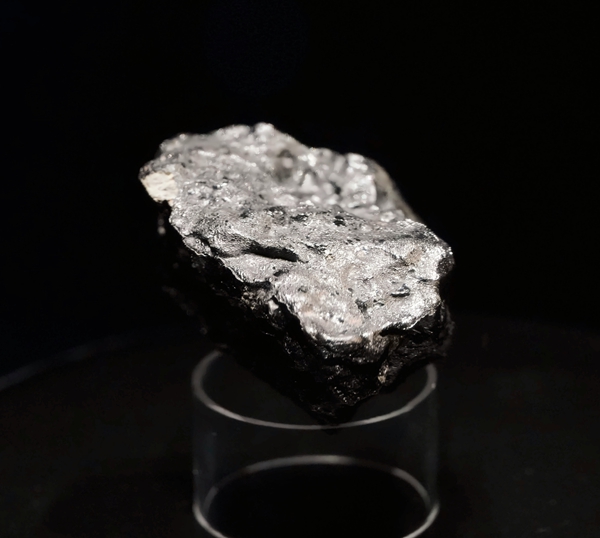
The challenge for secondary aluminum has always been impurities that weaken its mechanical properties. Recent breakthroughs are solving this. For example, composite iron removal using rare earth elements improves tensile strength and elongation, while advanced melting furnaces reduce hydrogen and inclusions, ensuring higher consistency. On top of this, new hydrometallurgical dross recycling technologies recover over 98% of valuable metals and salts, turning what was once waste into revenue.
AI and advanced spectroscopy are also revolutionizing scrap sorting, with accuracy levels above 99%. This precision not only improves material quality but also enhances efficiency across the supply chain.
Global trade rules are tightening. The EU’s Carbon Border Adjustment Mechanism (CBAM), fully effective in 2026, will raise export costs, while U.S. tariffs create further pressure. In response, China is combining policy guidance, stricter regulations, and regional demonstration projects to push its aluminum industry toward greener, smarter production.
Collaboration across the industrial chain is also accelerating. NIO recycles 100% of aluminum from its vehicles, CATL and Lizhong Group jointly developed a secondary aluminum battery tray that cuts the carbon footprint by 70%, and Tesla’s Cybertruck already uses secondary alloys in large castings. These cases show the industry’s move toward closed-loop recycling systems.
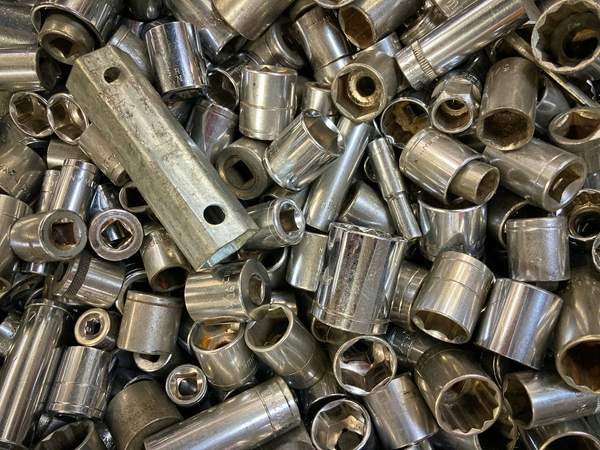
The next decade will define a new cycle for aluminum. The industry is moving toward “design–service–recycle” lifecycle management. From multipurpose alloys designed for easier recycling to cold-spray repair technologies and blockchain-based scrap tracking, innovations are pushing secondary aluminum up the value chain.
By 2030, its share in new energy vehicle (NEV) battery housings is expected to double, while usage in photovoltaic (PV) frames will exceed 80%. Even aluminum-air batteries, with an energy density of 800 Wh/kg, are entering pilot projects. These are not just trends—they are key battlegrounds for the future of green manufacturing.

Secondary aluminum has shifted from being seen as a lower-grade material to a cornerstone of sustainable die-casting. For manufacturers, it offers lower carbon footprints, more predictable costs, and alignment with international green supply chain standards. As the “Metal 2.0” model takes hold, the industry is moving from a linear consumption model to a circular one.
On the journey to greener die-casting, recycling and reusing aluminum alloys is no longer optional—it’s essential. The companies that embrace this shift will not only stay competitive but also contribute to a global sustainable future.
Hotline
0512-67371602
E-mail:sales@edt-china.cn
Add:West Building, 66 Songshan Road, Suzhou New District, P.R. China

Hotline